
Uk Fake Driver'S Licence
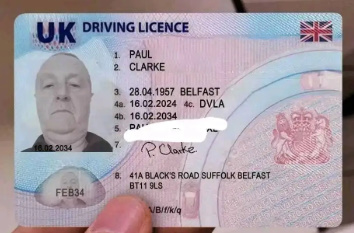
A UK FAKE DRIVER's LICENCE
Premium UK FAKE DRIVING LICENCE
WhatsApp +447340887018
UK Fake driving licence , DVLA driving licence · UK provisional licence · Fake UK driving licence renewal · UK Fake driving licence exchange · UK driving test · UK driving theory test · UK Fake drivers licence categories · UK driving licence fees · UK Fake driving license penalty points · UK photocard driving licence · UK driving licence check code
Long-tail / question keywords:
- how do I get a UK driving licence
- how do I apply for a UK provisional licence
- how long do I have to hold a UK provisional licence
- how do I book a UK driving test
- how do I renew a UK driving licence
- can I exchange a foreign driving licence for a UK one
- what is a UK driving licence check code
- how many penalty points before losing my UK licence
- how much does a UK driving licence cost
- is my UK driving licence valid in the EU
- what is the difference between a provisional and a full UK licence
- when do I have to stop driving at 70 in the UK
informational, with a heavy transactional minority — the theory test, the practical test, and the DVLA renewal all end at a booking or payment step.
Title tag (59 chars): UK Driving Licence: How to Get, Renew & Exchange One
Meta description (157 chars): A complete guide to the UK driving licence — provisional licence, theory and practical tests, DVLA renewal, foreign exchanges, categories, and penalty points.
H1: UK Driving Licence: A Complete Guide to Getting, Renewing, and Exchanging One
Heading structure:
- H2 How the UK licence system works (provisional to full)
- H2 Applying for a provisional licence
- H2 The theory test and the practical test
- H2 Exchanging a foreign licence for a UK one
- H2 Renewing, replacing, and updating your licence
- H2 Fees, validity, and licence categories
- H2 Penalty points, disqualification, and getting your licence back
- H2 Driving in the EU and abroad on a UK licence
- H2 FAQ
the twelve question keywords above.
Internal linking: UK provisional licence · DVLA theory test booking · UK practical driving test · DVLA licence renewal · UK penalty points and endorsements · UK vehicle tax and MOT · DVLA licence check code
Competitor gap: three openings most ranking pages leave on the table — (a) the “license” vs “licence” split: UK English uses licence for the noun and license for the verb, and the DVLA’s own pages follow it; a page that explains the term captures the searcher typing the American spelling and signals UK authority. (b) the photocard transition and the paper counterpart: most existing content either predates the abolition of the paper counterpart or glosses over the check code that replaced it — explaining how a hire company or employer actually verifies your record today is a real gap. (c) the 70-and-over renewal cycle and medical declarations, which the “renew online” pages skip entirely.
UK Driving Licence: A Complete Guide to Getting, Renewing, and Exchanging One
The UK driving licence is issued by the Driver and Vehicle Licensing Agency (DVLA) in Great Britain — England, Scotland and Wales — and by the Driver and Vehicle Agency (DVA) in Northern Ireland, which runs its own system. This guide covers the GB route unless it says otherwise.
First, the spelling, because it trips up a lot of searches: in UK English the noun is licence and the verb is license. The DVLA’s own pages follow that rule, so if you’ve been searching “UK driving license,” you’re looking for the same thing. And if you’ve seen the term “provisional licence” and wondered whether that’s the same as a learner permit — in the UK, yes: the provisional licence is the first stage, and it’s called a provisional, not a learner’s permit.
This guide covers the full path: provisional licence, theory and practical tests, exchanging a licence you already hold from abroad, renewal and replacement, the categories system, penalty points, and what happens at 70.
How the UK licence system works
The UK doesn’t use a single test. You move through stages, each a separate application with its own fee.
Provisional licence: the starting point. It allows you to drive, but only under supervision with a qualified driver, with L-plates displayed, and with restrictions — no motorway driving unless you’re with an approved instructor in a dual-control car, and a strict alcohol limit.
Full licence: granted after you pass the practical driving test. Supervision rules, L-plates and the provisional restrictions fall away.
There’s no intermediate licence stage in the UK system — the provisional-to-full jump is the whole ladder, which is where US and Irish systems differ most from it.
Applying for a provisional licence
The application runs through the DVLA, and you can apply online or by post. You must be at least 15 years and 9 months old to apply, and you can’t drive until you’re 17 (16 if you receive certain disability benefits) and the licence is in your hands.
You’ll need:
- Proof of identity — usually a UK passport, or a birth certificate plus another document if not.
- Your National Insurance number if you have one.
- Proof of address if applying by post.
- A photograph and signature if you’re applying for the first time or without a valid UK passport.
- Details of any medical condition that affects your driving.
If you hold a valid GB provisional licence you can also ride a moped from 16, and drive a car from 17, without a further application. The provisional licence is valid for a fixed term and is renewed separately from a full licence.
The theory test and the practical test
The theory test comes first, and it’s two parts taken in one sitting: a multiple-choice section on the Highway Code and road safety, and a hazard perception section using video clips. You must pass both parts together — passing one doesn’t carry over. The theory test pass certificate is valid for a fixed period, and you must pass the practical test within that window or you’ll sit theory again.
The practical test lasts around 40 minutes and includes an eyesight check, vehicle safety questions, general driving, and one of the manoeuvres. The independent driving section — where you follow directions or a satnav — is part of the standard test now. You’ll need a car that’s taxed, insured, MOT’d where applicable, and displaying L-plates, and you must be accompanied by a qualified driver.
If you fail, you can rebook, but there’s a waiting period and a fresh fee, and the wait lengthens with repeated attempts. Test availability varies sharply by centre, so book as early as you can.
Exchanging a foreign licence for a UK one
The UK accepts exchanges from a specific list of countries, and it is not simply “the EU plus a few others.” If your licence was issued in a country on the list, you can usually exchange it for an equivalent UK licence without sitting either test — but you must do so within a limited window after becoming resident, after which you have to go through the full UK process.
If your country isn’t on the list, you can generally drive on your foreign licence for a limited period as a visitor or new resident, but to get a UK licence you’ll need a provisional, then theory and practical tests — with possible exemptions from the provisional requirement depending on your licence and vehicle category.
Northern Ireland is a special case: a GB licence is accepted there and vice versa, but the exchange mechanics and the agencies involved differ. Because the list and validity windows are amended periodically, check the DVLA’s current published list against your country rather than relying on a summary.
Renewing, replacing, and updating your licence
Renewal depends on what you hold. A photocard licence is renewed periodically, and you must renew it even if your entitlement never expires — the photocard itself is time-limited. Renewal is done online, by post, or at a Post Office in some cases.
Replacement for a lost, stolen, or damaged licence is a fresh application with identity documentation and a fee. Your licence number stays the same.
Updates — a change of address, a change of name, a new category, or the removal of an endorsement — are separate transactions. A name change needs the supporting legal document; an address change is straightforward but must be done, since your licence number encodes your address details and a mismatch causes trouble at hire desks and with insurers.
The check code, and how your licence is verified now
This is the part most older guides get wrong. The paper counterpart to the photocard was abolished, so a hire company, employer or car rental desk can no longer read your endorsements off a piece of paper. Instead you generate a share code (often called the check code) on the DVLA’s site, valid for a short period, and give that to whoever needs to see your record. They look it up themselves.
If you’re hiring a car or being checked for a job, generate the code shortly before the check — it’s time-limited, and an expired code will send you back to the site.
Fees, validity, and licence categories
UK licences are issued in categories: the familiar car and motorcycle groups, plus bus, coach, lorry and trailer categories, each with its own age floors, medical requirements and tests. Provisional and full licences are separate applications with separate fees, and the fee depends on the category and the term.
The photocard is issued for a fixed term and must be renewed at the end of it, even though your entitlement to drive may run until you reach 70. At 70, entitlement itself expires and must be renewed — from then on in rolling short cycles — and each renewal requires a medical declaration. Certain conditions must be reported to the DVLA at any age, and failing to declare a notifiable condition is an offence in itself.
Penalty points, disqualification, and getting your licence back
The UK operates penalty points for driving offences, endorsed on your record. Points attach when you’re convicted or accept a fixed penalty, and they stay on your record for a defined period.
The two thresholds worth knowing: 12 points within a three-year period triggers disqualification for most drivers under the totting-up procedure, and new drivers (within two years of passing their first test) lose their licence at 6 points, reverting to provisional status and having to sit both tests again.
Disqualification can also be imposed directly by a court for a specific offence — drink driving, dangerous driving, or driving while disqualified — and for some offences the period and the requirements to get back on the road are set by the court, including an extended retest. Driving while disqualified is a separate offence, so the exposure compounds.
However, a fake driving licence is not a legitimate substitute for a licence issued by the UK’s official licensing authorities. Using fraudulent identification can result in criminal investigation, financial loss, identity theft, and problems with employment, banking, travel, insurance, and other services.
This guide explains what a UK driving licence is, what makes a counterfeit licence fraudulent, the risks involved, how suspicious documents may be identified, and what legitimate alternatives are available.
What Is a UK Driving Licence?
A UK driving licence is an official document that confirms a person’s driving entitlement and provides an accepted form of identification in many circumstances.
Driving licences are administered through the relevant licensing authority:
DVLA — Great Britain, including England, Scotland, and Wales
DVA — Northern Ireland
A legitimate licence is connected to official records. Consequently, a physical card that looks authentic does not necessarily represent a valid driving entitlement.
What Is a UK Fake Driving Licence?
A UK fake driving licence is a document that falsely represents itself as an official UK driving licence.
Counterfeit documentation can take different forms, including:
Completely fabricated cards
Altered genuine licences
Documents containing another person’s information
Falsified photographs or personal details
Digitally manipulated copies
Documents falsely presented as being issued by the DVLA or DVA
The important issue is not simply whether a card looks convincing. A genuine driving licence represents an entitlement recorded within the appropriate licensing system.
Why Do People Search for Fake UK Driving Licences?
There are several reasons people may search for counterfeit licences. Some searches are connected to attempted fraud, while others arise from people looking for solutions to legitimate problems.
Common motivations can include:
Losing a genuine licence
Wanting identification quickly
Attempting to avoid the normal licensing process
Misrepresenting age or identity
Trying to satisfy an identity check
Attempting to drive without the appropriate entitlement
Responding to advertisements for counterfeit documents
Looking for novelty or entertainment items
Whatever the motivation, using a counterfeit document can create considerably more serious problems than the original issue.
Is a UK Fake Driving Licence Illegal?
Using a counterfeit driving licence or falsely presenting a document as genuine can amount to fraud or other offences depending on the circumstances.
The consequences depend on factors such as how the document was obtained, whether it was used, what it was used for, and whether other offences were involved.
Possible consequences include:
Driving-related penalties
Insurance complications
Employment consequences
Immigration or travel
The legal consequences can therefore extend well beyond simply having a fraudulent card confiscated.
Fake Licence vs. Genuine Licence
One of the most important distinctions is that a genuine driving licence is backed by an official record.
A counterfeit card may reproduce names, photographs, numbers, logos, or other visual elements, but that does not create a legitimate driving entitlement.
For driving purposes, what matters is whether the driver is properly licensed and entitled to drive the relevant vehicle.
How Can a Fake UK Driving Licence Be Detected?
Organisations can use multiple methods to identify suspicious documents.
Depending on the situation, verification may involve:
Checking information against official records for UK Fake ID
Examining the physical document for Fake UK ID Card
Checking consistency between the document and other identification
Reviewing security features
Using electronic identity-verification systems
Confirming driving entitlement through appropriate channels
This means that a counterfeit document that appears convincing during a casual visual inspection may still fail a formal verification process.
Signs of a UK Licence is not well made
It may contain inconsistencies that error questions about authenticity.
Potential warning signs include:
Spelling mistakes
Incorrect formatting
Unusual typography
Misaligned information
Poor-quality printing
Inconsistent personal information
Altered photographs
Unusual damage or tampering
Information that conflicts with other records
A claimed licence that cannot be verified
However, visual inspection alone is not sufficient to establish whether a document is genuine.
Fake Driving Licence
People searching online for fake licences can also become victims of scams.
A fraudulent seller may advertise a document as “real,” “registered,” or “guaranteed to pass checks.” After receiving payment, the seller may:
Request additional personal information.
Ask for photographs of passports or existing identification.
Demand additional fees.
Provide an unusable document.
Disappear without delivering anything.
There is an additional identity-theft risk because a person searching for a fake licence may voluntarily provide sensitive personal information to an unknown individual.
Recomended
Full name
Date of birth
Address
Photograph
Signature
Passport details
Existing driving licence information
Copies of identity documents
Driving in the EU and abroad on a UK licence
A full GB photocard licence is generally recognised for driving in the EU, EEA and Switzerland for visits, and does not require an International Driving Permit for most short trips. Some countries outside that group do require an IDP, and there are two different IDP types, so check your destination before you travel. You cannot use a provisional licence abroad to drive unsupervised.
FAQ
How do I get a UK driving licence? Apply for a provisional licence, study and pass the theory test, take lessons, then pass the practical driving test at a test centre. You must hold the provisional licence and have a valid theory pass before booking the practical.
How do I apply for a UK provisional licence? Apply online or by post to the DVLA with proof of identity, your National Insurance number if you have one, and details of any relevant medical condition. You can apply from 15 years and 9 months, and drive from 17 in a car (16 in some cases).
How long do I have to hold a UK provisional licence? There’s no fixed minimum holding period — you can book the theory test once you hold the provisional licence, and the practical once you have a valid theory pass certificate. The pass certificate is time-limited, so the practical must be taken within that window.
How do I book a UK driving test? Through the DVLA’s booking service, online. You’ll need your provisional licence number and, for the practical, a valid theory pass certificate. Book as far ahead as you can — waiting times vary widely by test centre.
How do I renew a UK driving licence? Online, by post, or at some Post Offices. Photocard licences must be renewed when the card expires; entitlement itself is renewed at 70, and from then on in shorter rolling cycles with a medical declaration.
Can I exchange a foreign driving licence for a UK one? Only from countries on the UK’s designated exchange list. If yours is listed, you can usually exchange without sitting either test, within a limited window of becoming resident. If it isn’t, you go through the provisional, theory and practical route.
What is a UK driving licence check code? The share code you generate on the DVLA site so a hire company, employer or rental desk can look up your driving record themselves. It replaced the paper counterpart and is valid for only a short period.
How many penalty points before losing my UK licence? 12 points within three years triggers disqualification for most drivers under totting-up. New drivers — within two years of passing their first test — lose their licence at 6 points and must retake both tests.
How much does a UK driving licence cost? Provisional and full licences, and the theory and practical tests, are separate fees, and they’re revised periodically. Check the DVLA’s current fee schedule before you apply or book.
Is my UK driving licence valid in the EU? A full GB photocard licence is generally recognised for driving in the EU, EEA and Switzerland for visits, without an International Driving Permit for most short trips. Check your specific destination, as some countries outside that group require an IDP.
What is the difference between a provisional and a full UK licence? A provisional licence lets you drive only under supervision, with L-plates and restrictions; a full licence is granted on passing the practical test and removes those conditions. There is no intermediate stage in the UK system.
When do I have to stop driving at 70 in the UK? You don’t stop — your entitlement expires at 70 and must be renewed, then renewed again in shorter rolling cycles, with a medical declaration each time. Certain medical conditions must be reported to the DVLA at any age.