North Carolina Fake Drivers License & North Carolina Fake ID
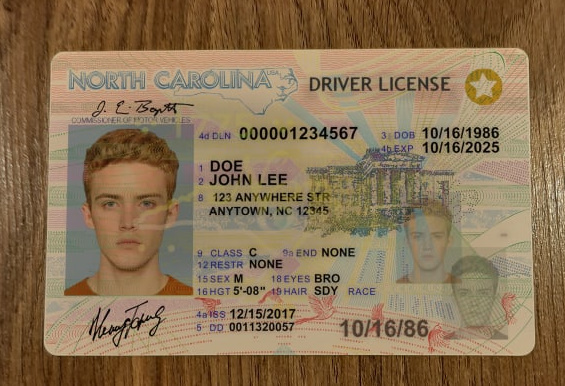
North Carolina Fake Drivers License & North Carolina Fake ID
Premium North Carolina Fake Drivers License & North Carolina Fake ID
$100
20% discount for 3 or more Fake IDs!
North Carolina fake driver’s license
North Carolina fake driver’s license
NC fake driver’s license
NC fake driver license
fake North Carolina driver’s license
fake NC driver’s license
North Carolina counterfeit driver’s license
NC counterfeit driver’s license
North Carolina fraudulent driver’s license
fake ID North Carolina
North Carolina fake ID
counterfeit North Carolina ID
NC driver’s license fraud
North Carolina driver’s license fraud
North Carolina fake ID risks
NC driver’s license verification
North Carolina counterfeit identification
North Carolina fake identification document
NC fake license detection
North Carolina fake ID detection
North Carolina identity fraud
North Carolina driver’s license fraud prevention
Long-Tail
Is a North Carolina fake driver’s license illegal?
What happens if you use a fake ID in North Carolina?
What are the risks of having a fake North Carolina driver’s license?
How to identify a fake North Carolina driver’s license
How are North Carolina driver’s licenses verified?
How does NC fake ID detection work?
What happens if you are caught with a fake driver’s license in North Carolina?
What to do if your North Carolina driver’s license is lost or stolen
How to get a legitimate North Carolina driver’s license
North Carolina counterfeit ID laws
Legal alternatives to a fake North Carolina ID
How businesses detect fake North Carolina IDs
North Carolina driver’s license identity verification
North Carolina driver’s license fraud prevention
What is the difference between a fake ID and a novelty ID in North Carolina?
North Carolina Fake Driver’s License: Legal Alternatives
Learn about North Carolina fake driver’s licenses, legal risks, fraud detection, online scams, and legitimate alternatives for obtaining or replacing an NC driver’s license.
H1
North Carolina Fake Driver’s License: Legal Alternatives
Recommended H2 Structure
H2: What Is a North Carolina Driver’s License?
Explain the purpose of an NC driver’s license and its role as an official identification document.
H2: What Is a North Carolina Fake Driver’s License?
Define counterfeit, altered, and fraudulently obtained identification without explaining how to create or acquire it.
H2: Why Do People Search for Fake North Carolina Driver’s Licenses?
Discuss common motivations and the risks associated with seeking counterfeit identification.
H2: Are Fake Driver’s Licenses Illegal in North Carolina?
Cover the legal issues surrounding possession, presentation, alteration, and fraudulent use of identification.
H2: Risks of Using a Fake North Carolina Driver’s License
Discuss potential legal, financial, identity-theft, employment, and other consequences.
H2: How Fake North Carolina Driver’s Licenses Can Be Detected
Focus on legitimate verification and fraud-prevention practices used by businesses and authorities.
H2: Online Fake ID Scams in North Carolina
Explain how fraudulent sellers can take payments, steal personal information, or distribute unusable documents.
H2: Fake Driver’s License vs. Novelty ID
Explain the distinction between novelty products and documents intended to impersonate official identification.
H2: What to Do If Your North Carolina Driver’s License Is Lost or Stolen
Explain legitimate replacement options rather than turning to counterfeit identification.
H2: How to Get a Legitimate North Carolina Driver’s License
Cover the lawful process for applying for, renewing, replacing, or obtaining an NC driver’s license.
H2: How Businesses Can Detect Suspicious North Carolina Identification
Discuss responsible identity-verification and fraud-prevention practices without providing methods for bypassing them.
H2: Frequently Asked Questions About North Carolina Fake Driver’s Licenses
FAQ Keyword Targets
Is it illegal to have a fake driver’s license in North Carolina?
What happens if you are caught with a fake ID in North Carolina?
Can a fake North Carolina driver’s license be detected?
How do businesses verify North Carolina driver’s licenses?
What are the penalties for using fraudulent identification?
What should I do if my North Carolina driver’s license is lost?
Can I legally use a novelty North Carolina ID?
How can I obtain a legitimate North Carolina driver’s license?
How can I report suspected identity or license fraud in North Carolina?
What is the difference between a fake ID and a novelty ID?
Suggested Entity / Authority References
North Carolina Division of Motor Vehicles (NCDMV)
North Carolina Department of Transportation
North Carolina Government
North Carolina driver licensing
North Carolina identity verification
North Carolina identity-fraud prevention
Internal Linking Opportunities
Fake ID Laws in the United States
North Carolina Identity Theft and Fraud
How to Detect Counterfeit Identification
U.S. Driver’s License Verification
What to Do After Losing Your Driver’s License
South Carolina Fake Driver’s License
Virginia Fake Driver’s License
Tennessee Fake Driver’s License
Georgia Fake Driver’s License
North Carolina Fake Driver’s License :
North Carolina Fake driver’s license : NCDMV, North Carolina REAL ID, North Carolina Fake drivers license renewal, North Carolina graduated licensing, limited learner permit, limited provisional license, North Carolina Fake driver’s license points, transfer out-of-state license to North Carolina
Understanding Your North Carolina Fake Driver’s License
A North Carolina Fake drivers license comes from the N.C. Division of Motor Vehicles, the NCDMV, part of the state Department of Transportation. The state runs a three-level graduated system for teenagers, a separate learner permit route for adults, and a two-track penalty structure that trips up more drivers than almost anything else — because North Carolina keeps two entirely separate point systems, one for your license and one for your insurance.
There’s also a recent change worth knowing before you start. Effective 1 October 2026, North Carolina eliminated the Driving Eligibility Certificate requirement for teen drivers under Session Law 2026-46. Students no longer need that certificate to obtain a limited learner permit. If you read older guidance referencing it, that requirement is gone.
This guide covers the whole credential: card types, the graduated levels, adult licensing, renewal, moving to North Carolina, and how points actually work.
Standard License or North Carolina REAL ID
North Carolina issues its license in two compliance versions, and the state charges the same for both.
A standard North Carolina license proves your driving privilege and identity, but it isn’t valid for federally controlled purposes. To enter certain facilities, you’d need it plus another federally accepted document.
A North Carolina REAL ID meets the federal standard. Several secure federal locations in the state require either a REAL ID or a standard license plus another accepted document — including the Federal Correctional Complex in Butner, military bases, federal courthouses, and nuclear power plants. The NCDMV also makes the point that REAL ID is optional and is not required to drive, vote, or receive federal benefits.
There is no extra fee. A North Carolina REAL ID costs the same as a standard license or ID card. Timing determines how you pay:
- Get a REAL ID within six months of your license expiring and you pay the regular renewal fee
- Get one more than six months before expiration — outside the renewal period — and it’s processed as a replacement, costing $16.75
The document requirements are specific:
- One document with your full name proving identity and date of birth
- One document showing your full name and full Social Security Number
- Two documents with your current physical address proving North Carolina residency
- One document proving liability insurance coverage from a provider licensed to do business in North Carolina — not required for a learner’s permit
- One or more name-change documents, if applicable
- For non-U.S. citizens, one document proving legal presence or lawful status
Two warnings from the NCDMV’s own guidance. Photocopies are not allowed for REAL ID. And if you cannot provide the specific documents that verify lawful status, you cannot complete an affidavit for REAL ID — there’s no substitute route.
The name on your Social Security document must match one of your identity documents, or you must supply a name-change proof such as a certified marriage license or certificate, a divorce decree, or a document from the courts or Register of Deeds.
The NCDMV publishes a REAL ID Document Wizard that produces a personalized list for your visit. Using it before you go is the simplest way to avoid a return trip.
Documents and How the State Issues Cards
For any first-time application — driver license, learner permit, or ID card — you need proof of your full name and date of birth, your NC residence address, and your Social Security number or documentation of legal presence. You must also prove vehicle liability insurance when applying for a driver license, and the policy must reflect your name. No electronic copy.
Some document details are worth knowing precisely:
- No electronic copy for insurance
- No altered documents of any kind
- Laminated documents must have been laminated by the issuing agency — your own lamination disqualifies the document
- You can upload documents stored on your phone, but identity documents such as name and date-of-birth verification cannot be uploaded
- A driver license, learner permit, or ID card submitted as identification must be expired less than 2 years and must reflect a photo
How your card reaches you is unusual. To prevent identity theft and fraud, the NCDMV issues licenses, permits, and IDs from a central location and mails them in an unmarked envelope. You receive a 60-day Temporary Driving Certificate while you wait, and the permanent card arrives before it expires.
One caution about that certificate: it may be used only for driving purposes and cannot be used for identification. Presenting it as ID won’t work.
State-to-State Verification deserves a flag for anyone arriving with an out-of-state license. As required by the federal REAL ID Act, the NCDMV uses the State-to-State Verification Service to electronically check whether applicants already hold licenses or IDs in other states. And the consequence is stated plainly: once you’re issued a new or duplicate license in North Carolina, any card issued in any other state is automatically canceled. If an applicant doesn’t want to cancel their out-of-state issuance, they won’t be issued a North Carolina license or ID.
Teen Licensing: The Three Levels
North Carolina drivers aged 15 to 17 proceed through three graduated levels. The entry requirement is a Driver’s Education Certificate from an approved course — you can enroll from age 14½, and the course involves 30 classroom hours plus at least 6 hours behind the wheel. From 1 October 2026, the separate Driving Eligibility Certificate is no longer required.
Level 1 — Limited Learner Permit (ages 15 to 17). Bring identity, Social Security, and residency documents plus the driver education certificate, and pass the written, sign, and vision tests with a parent or guardian present. For the first six months, you may drive only between 5 a.m. and 9 p.m., with a supervising driver beside you who has been licensed for five years. The fee is $25.50.
Level 2 — Limited Provisional License. The intermediate stage, with its own conditions on unsupervised driving and passenger carriage.
Level 3 — Full Provisional License. The final graduated stage before a regular license.
The structure mirrors other states’ graduated schemes, but the six-month 5 a.m. to 9 p.m. window at Level 1 and the five-year supervisory requirement are stricter than many.
Adult Licensing and the $6.50-Per-Year Fee
Adults 18 and over can skip the graduated levels and apply directly at a driver license office, passing the knowledge, road sign recognition, vision, and driving tests. You may also apply first for a learner permit if you prefer practice time.
The state also issues learner permits to adults 18 and older, alongside graduated permits and licenses to those 15 to 17. The type of license you receive and its fee depend on the vehicle you’ll operate.
On fees, North Carolina prices by the year for the standard credential, and new residents transferring in pay $6.50 per year for their license. That per-year structure means your total depends on the term assigned to your card.
Renewing a North Carolina Driver’s License
North Carolina’s online renewal rules changed in a way that’s easy to misread, so here’s the distinction.
Non-REAL ID licenses and state ID cards can now be renewed online two times in a row.
REAL ID licenses and state ID cards can also be renewed online a second consecutive time — but only if there was an in-person transaction where a new photo was taken since your last renewal. Without that photo refresh, the second online renewal isn’t available.
Online renewal is available up to six months before your expiration date, and you’ll need your license or ID number plus your Social Security number. If you don’t know your license number, the NCDMV suggests checking your vehicle registration card, car insurance company, employer or school records, doctor’s office, rental or lease agreement, bank, or tax preparation service.
Your new license or ID arrives in the mail within 20 business days.
In-person renewal is available at any NCDMV driver license office, and you’ll need to pass any required tests. Bring your current or expired license or ID.
Lost or stolen license? If you’re renewing one, bring two documents verifying your identity and a Social Security card or one document proving you have a Social Security number.
When tests are required on renewal is set by statute, and the rule is protective of drivers: the Division may not require a written or road test when you renew a license that hasn’t expired, unless one of two conditions applies — you’ve been convicted of a traffic violation since your license was last issued, or you suffer from a mental or physical condition impairing your ability to drive. Sign and symbol testing is required on initial issuance, though, so it applies to new drivers regardless.
Moving to North Carolina
New residents have 60 days from establishing permanent residency to transfer their out-of-state license.
Bring to an NCDMV driver license office:
- Your out-of-state license, or one document with your full name proving identity and date of birth
- A Social Security card or other document proving your Social Security number
- Two documents proving North Carolina residency
- Proof of liability insurance showing your name
The testing consequence depends on what you bring. If you present a valid out-of-state license, the written and road tests are waived. If you do not show a valid out-of-state license, you will be required to retake the written and road tests.
The process is a single office visit with a brief vision and road sign test. You walk out with a temporary paper license the same day, and the permanent card follows in about two weeks. The fee runs $6.50 per year.
And remember the State-to-State Verification rule: obtaining a North Carolina license cancels your out-of-state card automatically.
North Carolina’s Two Point Systems
This is the most important thing to understand about driving in North Carolina, and it’s the source of most confusion. License points and insurance points are separate systems with different values, different thresholds, and different consequences.
- License points are assigned by the NCDMV for traffic convictions and decide whether you keep driving. They’re mandated by G.S. 20-16(c).
- Insurance points are assigned under the Safe Driver Incentive Plan for convictions and at-fault accidents and decide what you pay at renewal.
One conviction carries a different value in each system. Following too closely, for example, is a 4-point violation for license purposes under G.S. 20-16(c) but 2 insurance points under the Department of Insurance schedule.
As of October 2026, the Department of Insurance publishes premium increases of 40 percent at 1 insurance point, 90 percent at 4 points, and 340 percent at 12 points. And for a conviction on or after 1 July 2025 carrying four or more insurance points — other than speeding — the surcharge runs five policy years instead of three.
The practical trap: paying a ticket is treated as being found responsible, so it counts in both systems. The amount printed on the citation is the number people read first and the least important one.
License Point Values
| Violation | License points |
|---|---|
| Passing a stopped school bus | 5 |
| Aggressive driving | 5 |
| Reckless driving | 4 |
| Hit and run, property damage only | 4 |
| Following too close | 4 |
| Driving on wrong side of road | 4 |
| Illegal passing | 4 |
| Failure to yield right-of-way to a pedestrian under G.S. 20-158(b)(2)b | 4 |
| Failure to yield right-of-way to a bicycle, motor scooter, or motorcycle | 4 |
| Running through a stop sign | 3 |
| Speeding in excess of 55 mph | 3 |
| Failing to yield right-of-way | 3 |
| Running through a red light | 3 |
| No driver’s license, or license expired more than one year | 3 |
| Failure to stop for a siren | 3 |
| Driving through a safety zone | 3 |
| No liability insurance | 3 |
| Failure to report an accident where a report is required | 3 |
| Speeding in a school zone above the posted limit | 3 |
| Failure to properly restrain a child in a restraint or seat belt | 2 |
| All other moving violations | 2 |
When License Points Lead to Suspension
Twelve or more points within a three-year period may result in suspension. Points are assessed based on the date of the offense, not the conviction date.
There’s a second, lower threshold that applies after a reinstatement: eight or more points within the three-year period immediately following reinstatement of a license suspended or revoked for traffic convictions can result in an additional suspension. A first suspension under the point system runs no more than 60 days.
One favorable mechanic: when a driving privilege is reinstated, all previous points on the record are canceled. That’s a genuine reset rather than a lingering accumulation.
The driver improvement clinic. At 7 points, the Division may offer a driver improvement clinic that removes 3 points, available once in any five-year period under G.S. 20-16(c).
A separate automatic suspension operates with no point total involved at all. Under G.S. 20-16.1(a), there’s a 30-day suspension for a conviction of exceeding the limit by more than 15 mph while above 55 mph, or of driving above 80 mph. Those are flat triggers — your point balance is irrelevant.
You can check your license status and point total through a MyDMV account.
Restoration and Reinstatement Fees
North Carolina’s restoration fees have risen in stages, and the current amounts (in effect since 1 July 2024) are:
| Fee | Prior to 1 Jul 2020 | 1 Jul 2020 – 30 Jun 2024 | 1 Jul 2024 – present |
|---|---|---|---|
| DWI reinstatement fee | $130 | $140.25 | $167.75 |
| Restoration fee | $65 | $70 | $83.50 |
| Service fee | $50 | $50 | $50 |
The DWI reinstatement fee is required when a DWI suspension term is complete. The restoration fee restores driving privileges once the suspension term is complete — and it’s not required if the license was taken for medical or health reasons following a medical evaluation. The service fee applies unless the license was surrendered to the court or mailed to NCDMV before the suspension or revocation effective date.
These are separate from the cost of getting a replacement or newly issued license. Online payment carries a small transaction charge plus a card processing fee.
Two practical warnings. First, failure to appear and failure to pay both cause indefinite suspensions until you comply with the case — these usually have to be fixed through the court, not through the DMV. Second, if you’re applying for a license in another state while still suspended in North Carolina, the NCDMV requires you to first reinstate your North Carolina driving privileges and pay all outstanding fees.
Hearings are available, and the form (HF-001) distinguishes the types. Pre-suspension hearings — for speeding, points, or a first offense out-of-state DWI, under G.S. 20-16 and G.S. 20-13 — carry a $100 fee, and separate requests and fees apply where noted.
Practical Tips for North Carolina Drivers
- Don’t confuse the two point systems. Your license point balance and your insurance point balance are unrelated, and a paid ticket moves both.
- Build your REAL North Carolina Fake ID documents before your visit. Photocopies aren’t accepted, and amended or self-laminated documents are refused.
- Understand the online renewal limit. Standard licenses renew online twice in a row; REAL IDs need an in-person photo transaction in between.
- Watch the flat triggers. More than 15 mph over while above 55, or over 80 mph, brings a 30-day suspension regardless of points.
- Use the clinic if you’re at 7 points. Three points off, once in five years.
- Note the reinstatement reset. All previous points are canceled when your privilege is restored.
- Don’t let a failure to appear drift. It suspends indefinitely, and a court has to clear it.
- Expect your old license to be canceled. State-to-State Verification handles that automatically.
Frequently Asked Questions
How much does a North Carolina driver’s license cost? The standard structure is $6.50 per year, so the total depends on your license term. New residents pay the same per-year rate. A replacement is $16.75, and a Level 1 limited learner permit is $25.50.
Does a North Carolina REAL ID cost extra? No. It costs the same as a standard license. Get it within six months of expiration and you pay the regular renewal fee; earlier than that, it’s processed as a $16.75 replacement.
How many points suspend a North Carolina license? Twelve or more within three years, or eight or more in the three years after a reinstatement. A first point suspension runs no more than 60 days. Separately, a 30-day suspension applies to driving more than 15 mph over the limit while above 55 mph, or above 80 mph, with no point total involved.
Do I have to retake tests when I move to North Carolina? No, if you show a valid out-of-state license — the written and road tests are waived. Without a valid out-of-state license, you must retake both.
How long do I have to get a North Carolina fake license after moving? Sixty days from establishing permanent residency.
What is the difference between license points and insurance points in North Carolina? License points come from the NCDMV under G.S. 20-16 and determine whether your license is suspended. Insurance points come from the Safe Driver Incentive Plan and determine your premium surcharge — 40 percent at 1 point, 90 percent at 4, and 340 percent at 12.
Is the Driving Eligibility Certificate still required in North Carolina? No. Effective 1 October 2026, North Carolina eliminated the Driving Eligibility Certificate requirement for teen drivers, so students no longer need it for a limited learner permit.
Can I renew my North Carolina license online? Yes, up to six months before expiration. Standard licenses and state North Carolina Fake IDs can be renewed online two times in a row. REAL North Carolina Fake ID documents can also be renewed a second consecutive time, provided a new photo was taken in an in-person transaction since your last renewal.