Ontario Fake Driver’S Licence
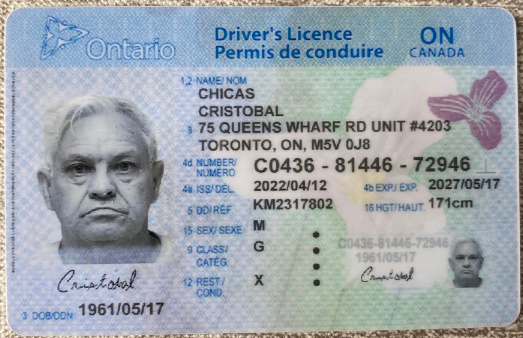
Ontario Fake Driver’S Licence
Premium Ontario Fake Driver’S Licence
Price $150
Ontario Driver’s Licence :
Ontario Fake drivers licence , Ontario G1 licence, Ontario G2 licence, Ontario graduated licensing, Ontario demerit points, Ontario licence renewal, exchange out-of-province driver’s licence
Understanding Your Ontario Fake Driver’s Licence
An Ontario Fake drivers license comes from the Ministry of Transportation (MTO), with testing and licensing services delivered through DriveTest centres under provincial licence, and renewals and address changes handled at ServiceOntario. Knowing which door to walk through saves a wasted trip: tests and first licences at DriveTest, renewals and exchanges at ServiceOntario.
Ontario fake driver’s licence
Secondary Keywords
Ontario fake driver’s licence
Ontario fake driver licence
Ontario fake driver license
ON fake driver’s licence
ON fake driver licence
fake Ontario driver’s licence
fake Ontario driver licence
fake Ontario driver’s license
Ontario counterfeit driver’s licence
Ontario counterfeit driver licence
Ontario fraudulent driver’s licence
fake ID Ontario
Ontario fake ID
counterfeit Ontario ID
Ontario driver’s licence fraud
Ontario driver’s license fraud
Ontario fake ID risks
Ontario driver’s licence verification
Ontario counterfeit identification
Ontario fake identification document
Ontario fake licence detection
Ontario fake ID detection
Ontario identity fraud
Ontario driver’s licence fraud prevention
Long-Tail Keywords
Is an Ontario fake driver’s licence illegal?
What happens if you use a fake ID in Ontario?
What are the risks of having a fake Ontario driver’s licence?
How to identify a fake Ontario driver’s licence
How are Ontario driver’s licences verified?
How does Ontario fake ID detection work?
What happens if you are caught with a fake driver’s licence in Ontario?
What to do if your Ontario driver’s licence is lost or stolen
How to get a legitimate Ontario driver’s licence
Ontario counterfeit ID laws
Legal alternatives to a fake Ontario ID
How businesses detect fake Ontario IDs
Ontario driver’s licence identity verification
Ontario driver’s licence fraud prevention
What is the difference between a Ontario fake ID and a novelty ID in Ontario?
Ontario Fake Driver’s Licence: Legal Alternatives
Learn about Ontario fake driver’s licences, and legitimate alternatives for obtaining or replacing an Ontario driver’s licence.
H1
Ontario Fake Driver’s Licence: Laws, Risks, Detection and Legal Alternatives
Recommended H2 Structure
H2: What Is an Ontario Driver’s Licence?
Explain the purpose of an Ontario driver’s licence and its role as an official form of identification.
H2: What Is an Ontario Fake Driver’s Licence?
Define counterfeit, altered, and fraudulently obtained identification without explaining how to create or acquire it.
H2: Why Do People Search for Fake Ontario Driver’s Licences?
Discuss common motivations and the risks associated with seeking counterfeit identification.
H2: Are Fake Driver’s Licences Illegal in Ontario?
Cover the legal issues surrounding possession, presentation, alteration, and fraudulent use of identification.
H2: Risks of Using a Fake Ontario Driver’s Licence
Discuss potential legal, financial, identity-theft, employment, and other consequences.
H2: How Fake Ontario Driver’s Licences Can Be Detected
Focus on legitimate verification and fraud-prevention practices used by businesses and authorities.
H2: Online Fake ID in Ontario
Explain how fraudulent sellers can take payments, misuse personal information, or provide documents that cannot legitimately be used.
H2: Fake Driver’s Licence vs. Novelty ID
Explain the difference between novelty products and documents intended to impersonate official identification.
H2: What to Do If Your Ontario Driver’s Licence Is Lost or Stolen
Explain legitimate replacement options instead of seeking counterfeit identification.
H2: How to Get a Legitimate Ontario Driver’s Licence
Cover the lawful process for applying for, renewing, replacing, or obtaining an Ontario driver’s licence.
H2: How Businesses Can Detect Suspicious Ontario Identification
Discuss responsible identity-verification and fraud-prevention practices without explaining how to bypass them.
H2: Frequently Asked Questions About Ontario Fake Driver’s Licences
FAQ Keyword Targets
Is it illegal to have a fake driver’s licence in Ontario?
What happens if you are caught with a fake ID in Ontario?
Can a fake Ontario driver’s licence be detected?
How do businesses verify Ontario driver’s licences?
What are the penalties for using fraudulent identification?
What should I do if my Ontario driver’s licence is lost?
Can I legally use a novelty Ontario Fake ID ?
How can I obtain a legitimate Ontario driver’s licence?
How can I report suspected identity or licence fraud in Ontario?
What is the difference between a fake ID and a novelty Ontario Fake ID ?
Suggested Entity / Authority References
ServiceOntario
Ontario Ministry of Transportation
Ontario Government
Ontario driver licensing
Ontario identity verification
Canadian identity-fraud prevention
Internal Linking Opportunities
Fake ID Laws in Canada
Ontario Identity Theft and Fraud
How to Detect Counterfeit Identification
Canadian Driver Licence Verification
What to Do After Losing Your Driver Licence
Quebec Fake Driver Licence
British Columbia Fake Driver Licence
Alberta Fake Driver Licence
Manitoba Fake Driver Licence
Ontario runs a two-step graduated system — G1, then G2, then full G — and it’s genuinely slow by design. The official handbook states the process takes at least 20 months to complete, and DriveTest puts the practical range at 20 to 24 months for most people. You have up to five years to finish; miss that and you start over.
There’s also a recent change worth noting. As of 11 May 2026, when you apply for a class G or class M licence you must declare that Ontario is your primary place of residence and that your presence in Canada is legal. That self-declaration now applies at application, renewal, exchange, and upgrade.
The Class G Licence and What It Covers
Ontario has 15 types of licence, each certifying you for a specific vehicle type. For a car, van, or small truck, you need a Class G licence.
Under the regulation, Class G covers any motor vehicle not exceeding 11,000 kilograms gross weight or registered gross weight, and any combination of a motor vehicle and towed vehicles not exceeding a total gross weight of 11,000 kg in which the towed vehicles don’t exceed 4,600 kg — but not a motorcycle or motor-assisted bicycle, a bus carrying passengers, or an ambulance in the course of providing ambulance service.
Class G1 covers any motor vehicle in Class G and combinations with towed vehicles, except Class D farm vehicles deemed to be Class G, Class F vehicles deemed to be Class G, and vehicles equipped with air brakes. Class G2 covers any motor vehicle in Class G plus trailer combinations, again excepting air-brake-equipped vehicles.
Vision standards apply to all three classes. An applicant or holder of a Class G, G1, or G2 licence must have:
- Visual acuity of not poorer than 20/50 by Snellen Rating, with both eyes open and examined together, with or without corrective lenses and with or without telescopic lenses
- A horizontal visual field of at least 120 continuous degrees along the horizontal meridian, and at least 15 continuous degrees above and below fixation, with both eyes open and examined together
Applying for Your First Licence
To apply you must:
- Be at least 16 years old
- Be a resident of Ontario — not a visitor
- Pass a vision test
- Pass a knowledge test about the rules of the road and traffic signs
Documents must show proof of legal name and date of birth with the day, month, and year. Documents must be original and valid — photocopies and expired documents are not acceptable.
Pass the vision and knowledge tests and you receive a G1 licence, entering Level One of graduated licensing.
Ontario’s Graduated Licensing System
The progression is fixed: two learning levels, two road tests.
G1 (Level One). You drive only when accompanied by a fully licensed driver with at least four years of driving experience, and additional conditions apply. Ontario is strict on the alcohol rule here: by law, a G1 holder must maintain a zero blood alcohol level.
G2 (Level Two). Holders may drive Class G vehicles without an accompanying driver, subject to conditions — with particular restrictions applying to drivers 21 and under.
Full Class G. The final stage, again with conditions applying to drivers 21 and under.
The holding requirements structure the timeline:
- If you have never driven before, you must gain one year of driving experience before you qualify for the G2 road test. Taking a course at an MTO-recognised driving school reduces that eligibility requirement by four months.
- After obtaining your G2, you must practice driving for at least a year before you qualify for the G road test.
The two road tests differ in scope. The Class G2 road test assesses basic driving skills — commonly called a “city test” — and usually takes about 20 minutes. The Class G road test assesses more advanced skills, includes a highway component, and usually takes about 30 minutes.
If you take a recognised driving school course, that four-month reduction is the single biggest lever on how quickly you can move through the system.
What Ontario Tests and Licences Cost
| Item | Fee |
|---|---|
| Full application package — includes knowledge test, G2 road test, and a five-year licence, payable at application | $159.75 |
| Knowledge test, per extra attempt | $16.00 |
| Class G2 road test (to earn a G2 licence) | $53.75 |
| Class G road test (to earn a full G licence) | $91.25 |
| Five-year licence | $90.00 |
| Licence exchange, for drivers from jurisdictions with reciprocal agreements | — |
The $159.75 package is the figure most new drivers pay, and it bundles three things: the knowledge test, the G2 road test, and a five-year licence. Note what isn’t in it — the G road test at $91.25 is a separate charge later, and extra knowledge test attempts cost $16.00 each.
Because the licence itself is $90 of that package, it’s worth understanding the renewal cost structure alongside it.
Renewing Your Ontario Licence
An Ontario driver’s licence is valid for 5 years, and you must renew every five years, either online or at a ServiceOntario centre. Your new licence arrives in the mail within 4 to 6 weeks, and the renewal fee is $90.
Online renewal eligibility requires that you:
- Have a full licence (G, M, or GM class) that isn’t cancelled or suspended
- Or hold a combination class of G1M, G2M, GM1, or GM2 — in which case only the full portion will be renewed online
- Haven’t updated your address within the last 90 days
- Don’t need tests — vision, written, or road
- Aren’t removing a vision condition
- Have no new medical conditions that may prevent you from driving
- Have no outstanding fines or penalties
To renew online you need:
- Your driver’s licence number
- The 7-digit trillium number found on the back of your licence
That trillium number is the detail that stops a lot of people — it’s on the back of the card, not the front, and it isn’t the same as your licence number.
Ontario lets you renew your health card and driver’s licence at once, and the combined transaction carries the $90 fee.
Renewing in person at a ServiceOntario centre means taking in the renewal application form mailed to you, signing it, showing identification, paying the fee, and having your photograph taken. ServiceOntario centres are all equipped to take photographs. You’ll get a temporary licence on the spot if your application and documents are in order, and the permanent one follows by mail.
You must carry your licence with you whenever you drive, and produce it when a police officer requests it.
Exchanging an Out-of-Province Licence
Ontario has licence exchange agreements with every Canadian province and territory (including Canadian Forces Europe), all U.S. states, the Canadian Armed Forces, and certain foreign countries. If you’re relocating from one of those jurisdictions, you may be eligible for a direct licence exchange without entering the graduated system.
The eligible jurisdictions are:
- Any Canadian province or territory
- Canadian Armed Forces
- U.S. states — not U.S. protectorates or U.S. territories
- Australia, Austria, Belgium, Croatia, France, Germany, Great Britain, Hungary, Denmark, the Isle of Man, Japan, South Korea, Kosovo, New Zealand, Northern Ireland, Republic of Ireland, Switzerland, Taiwan, and Ukraine
Drivers receive a full Class G licence provided they hold an equivalent class licence. If you have fewer than two years of driving experience, you may get credit for your experience and enter Level Two of the graduated system — then, once you have a total of two years of driving experience, take the Level Two road test to earn full privileges.
What you cannot exchange:
- A learner’s permit from any jurisdiction
- A licence from a jurisdiction not listed as eligible
- A licence cancelled for certain specific reasons, including alcohol-related offences or demerit points, a prohibited licence, or a licence under suspension for Criminal Code offences
- A motorcycle licence class from Austria, Belgium, Croatia, Denmark, France, Germany, Great Britain, Hungary, Isle of Man, Kosovo, Japan, New Zealand, Republic of Ireland, South Korea, Taiwan, or Ukraine
That last exclusion is easy to miss: even if your car licence exchanges, a motorcycle class from those countries does not.
A significant new provision. Effective 1 July 2026, drivers from jurisdictions without an exchange agreement with Ontario may obtain up to a maximum of 12 months of non-reciprocal driving experience credits. You’ll be required to complete both the Class G2 and G road tests. To claim the credit you show a valid, original foreign driver’s licence plus an authentication document — an official letter from the foreign government or agency that issued the licence, confirming it’s authentic.
There are also special exemptions for protected persons, refugees, and people from Ukraine who aren’t able to provide a valid, original driver’s licence.
Foreign licence applications and translations may be required depending on the jurisdiction.
Ontario’s Demerit Point System
Ontario’s demerit system runs two separate thresholds depending on your licence type, and understanding both is essential because the novice threshold is barely more than half the full one.
Points are added only on conviction. And crucially, paying a ticket counts as a conviction — under the Provincial Offences Act, the court office accepting payment is a guilty plea. Each point is dated to the offence, not the court date, and counts toward your total for two years from that day.
Full Licence Holders
| Points | Consequence |
|---|---|
| 6 to 8 | Warning letter |
| 9 to 14 | Second warning letter encouraging improved driving behaviour, and the Registrar may require you to attend an interview before a Ministry official to show cause why your licence should not be suspended |
| 15 or more | Licence suspended for 30 days |
Under the regulation, at 9 to 14 points the Minister may suspend or cancel your licence if you fail to attend the required interview, don’t comply with the Ministry’s requirements following it, or haven’t shown cause. A suspension of that kind is not reinstated until the Minister considers an advisable period has elapsed from surrender, or two years have elapsed from the suspension date — whichever occurs first.
At 15 or more points, the Registrar shall suspend after giving notice. For a first suspension, it’s not reinstated until 30 days have elapsed from the date the licence was surrendered, or two years from the suspension date, whichever comes first.
Novice Drivers (G1, G2, M1, M2)
| Points | Consequence |
|---|---|
| 2, 3, 4, or 5 | The Registrar mails a notice setting out the reason, the circumstances under which the licence may be suspended, and any other action the Ministry may take |
| 6, 7, or 8 | The Registrar may require you to attend an interview before a Ministry official at a designated time and place |
| 9 or more | Licence suspended |
The novice suspension periods are longer than the full-licence equivalent:
- First suspension: not reinstated until 60 days have elapsed from surrender, or two years from the suspension date, whichever comes first
- Subsequent suspension: not reinstated until six months have elapsed from surrender, or two years from the suspension date, whichever comes first
A suspension counts as “subsequent” only if it results from a conviction for an offence committed within two years after the expiry of a prior suspension under that section.
After a novice suspension, your points are reduced to four. From the handbook: after the suspension the number of points on your record is reduced to four, and any extra points could again bring you to the interview level. If you reach nine points again, your licence may be suspended for six months.
One point of note that catches novice drivers out: a single conviction for a 4-point offence suspends a novice licence on its own — because nine points is the threshold, but the interview level begins at six, and certain 4-point offences carry their own mandatory novice suspension.
Novice condition offences carry their own penalties. Under the Highway Traffic Act, a novice driver who contravenes a licence condition is guilty of an offence and liable on conviction to a fine of not less than $60 and not more than $500. For a young driver contravening a condition imposed on their licence, the fine range is the same and the licence is suspended for 30 days.
Insurance works differently from points. Insurers do not rate on demerit points — they rate on convictions, which stay on the standard three-year driver record after the points have expired. So a ticket can affect your premium long after your point total has cleared.
Suspensions, Administrative Penalties, and Reinstatement
The reinstatement fee is $281, and it does not apply if your licence was suspended for a medical reason.
The sequence to reinstate is fixed:
- Pay any outstanding fines
- Complete any court processes or court-ordered programs needed to clear the suspension
- Gather documents stating the suspension has been lifted — a Notice of Suspension letter, a medical letter, or an affidavit, for example
Once a suspension is lifted, you can renew your licence. To get a new licence, visit a DriveTest centre or the ServiceOntario Bay and College location in downtown Toronto, bringing original identification verifying your legal name, date of birth, and signature. Applicable fees for the written test and road tests apply if you need to take them.
Administrative penalties apply separately for certain suspensions. Under the Administrative Penalties regulation, a person whose licence is suspended under section 48 of the Act pays an administrative penalty of:
- $250 for a first suspension
- $350 for a second suspension
- $450 for a third or subsequent suspension
These apply where the suspension commenced on or after 1 January 2019, with earlier suspensions governed by the amounts as they read on 31 December 2018.
And there’s a harsher consequence for failing to act. A licence suspended for failure to attend an interview, failure to comply with Ministry requirements, or failure to show cause is not reinstated until the Minister considers an advisable period has elapsed — or two years have passed. Missing an interview can therefore cost you two years of driving.
Practical Tips for Ontario Drivers
- Take a recognised driving school course. It cuts four months off your G2 eligibility — the biggest single time saving available.
- Build the timeline into your plans. Graduated licensing takes at least 20 months, and you have five years before you start over.
- Know your trillium number. Online renewal needs the 7-digit number on the back of your licence.
- Watch your novice point level. The letter starts at 2 points, the interview at 6, and suspension at 9 — less than two-thirds of the full-licence threshold.
- Understand that paying a ticket is a conviction. It counts, and it can affect insurance for three years after the points clear.
- Check the motorcycle exchange exclusion. A car licence may exchange from a listed country while a motorcycle class does not.
- Act on interview notices immediately. Ignoring one can suspend your licence for up to two years.
- Plan the G road test separately. The $91.25 fee isn’t part of the $159.75 application package.
Frequently Asked Questions
How much does an Ontario Fake driver’s license cost? The full application package is $159.75, covering the knowledge test, the G2 road test, and a five-year licence. The G road test is a separate $91.25, extra knowledge test attempts are $16.00 each, and licence renewal is $90.
How long does Ontario’s graduated licensing take? At least 20 months, and typically 20 to 24 months. You have up to five years to complete the process before you must start over.
How many demerit points suspend an Ontario licence? Fifteen or more for a fully licensed driver, with a warning at 6 to 8 and a possible interview at 9 to 14. Novice drivers are suspended at 9 points, with a letter at 2 and an interview at 6.
Can I renew my Ontario Fake Driver’s license online? Yes, if you hold a full G, M, or GM licence that isn’t cancelled or suspended, haven’t changed your address in the last 90 days, need no tests, have no new medical conditions, and have no outstanding fines. You’ll need your licence number and the 7-digit trillium number from the back of your card.
Can I exchange my out-of-province licence in Ontario? Yes, from any Canadian province or territory, all U.S. states, the Canadian Armed Forces, and certain listed countries — with a full Class G licence if you hold an equivalent class and at least two years of experience. Learner permits cannot be exchanged.
What is the Ontario licence reinstatement fee? $281, and it doesn’t apply if your licence was suspended for a medical reason. Administrative penalties of $250, $350, or $450 may also apply depending on the suspension count.
Do I need to declare residency and legal presence? Yes. Since 11 May 2026, applications, renewals, exchanges, and upgrades for a class G or class M licence require you to self-declare that Ontario is your primary residence and that your presence in Canada is legal.
Does taking a driving course speed up Ontario licensing? Yes. Completing a course at an MTO-recognised driving school reduces the one-year G2 eligibility requirement by four months.